
Key Takeaways
- Traditional HVAC filters physically capture airborne particles such as dust and pollen.
- UV air purification uses UV-C light to inactivate certain microorganisms rather than physically removing particles.
- UV treatment and filtration serve different purposes and can complement each other when properly designed.
- Professional air quality services in Central Valley can help identify an appropriate solution based on your HVAC system and indoor-air concerns.
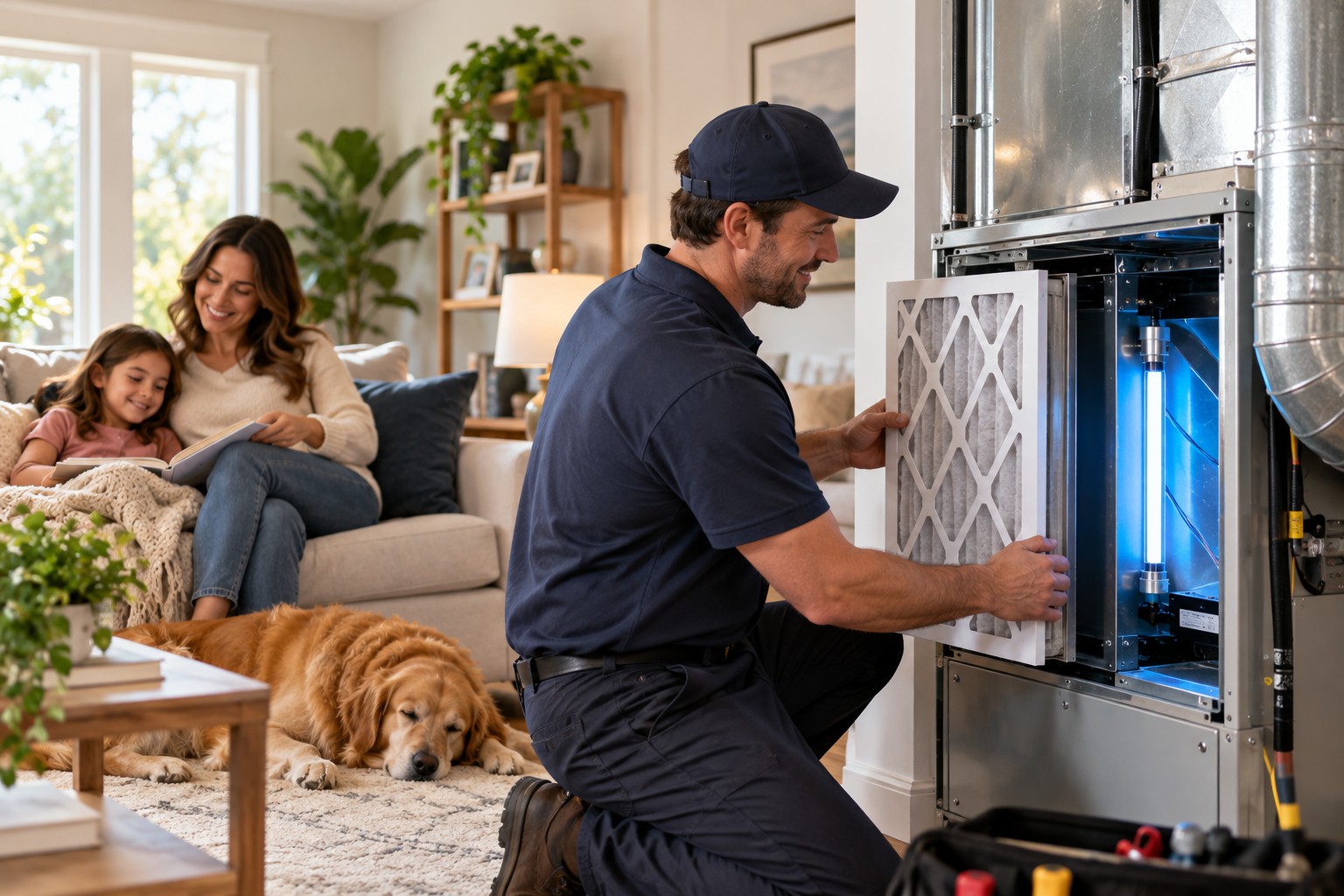
When your HVAC system circulates air, what is actually being removed? For homeowners considering air quality services in Central Valley, two common options are traditional air filtration and UV air purification. Filters capture airborne particles, while UV light inactivates certain microorganisms. Understanding this difference can help you choose the right solution for your home's indoor air concerns.
What Is the Difference Between UV Air Purification and Air Filtration?
Air filtration captures airborne particles as air passes through the HVAC filter, while UV air purification uses UV-C light to damage or inactivate certain microorganisms.
In simple terms, filters remove particles, while UV treatment targets certain biological contaminants.
Traditional filters can capture particles such as:
- Dust and household debris
- Pollen
- Certain pet-related particles
- Airborne particulate matter
- Some mold spores, depending on filter efficiency
UV systems target certain biological contaminants, including bacteria, fungi, and viruses, but do not replace physical filtration because treated particles can remain in the air.
How Does Traditional Air Filtration Work?
A conventional HVAC filter captures airborne particles as air passes through the return-air system. For whole-home air filtration in Central Valley, the filter should be compatible with the HVAC system's design, dimensions, airflow requirements, pressure limits, and manufacturer specifications.
A higher-efficiency filter is not always better if it restricts airflow and affects system performance. Regular replacement is also essential, with intervals based on the filter type, household conditions, system requirements, and manufacturer recommendations.
How Does a UV Air Purification System Work?
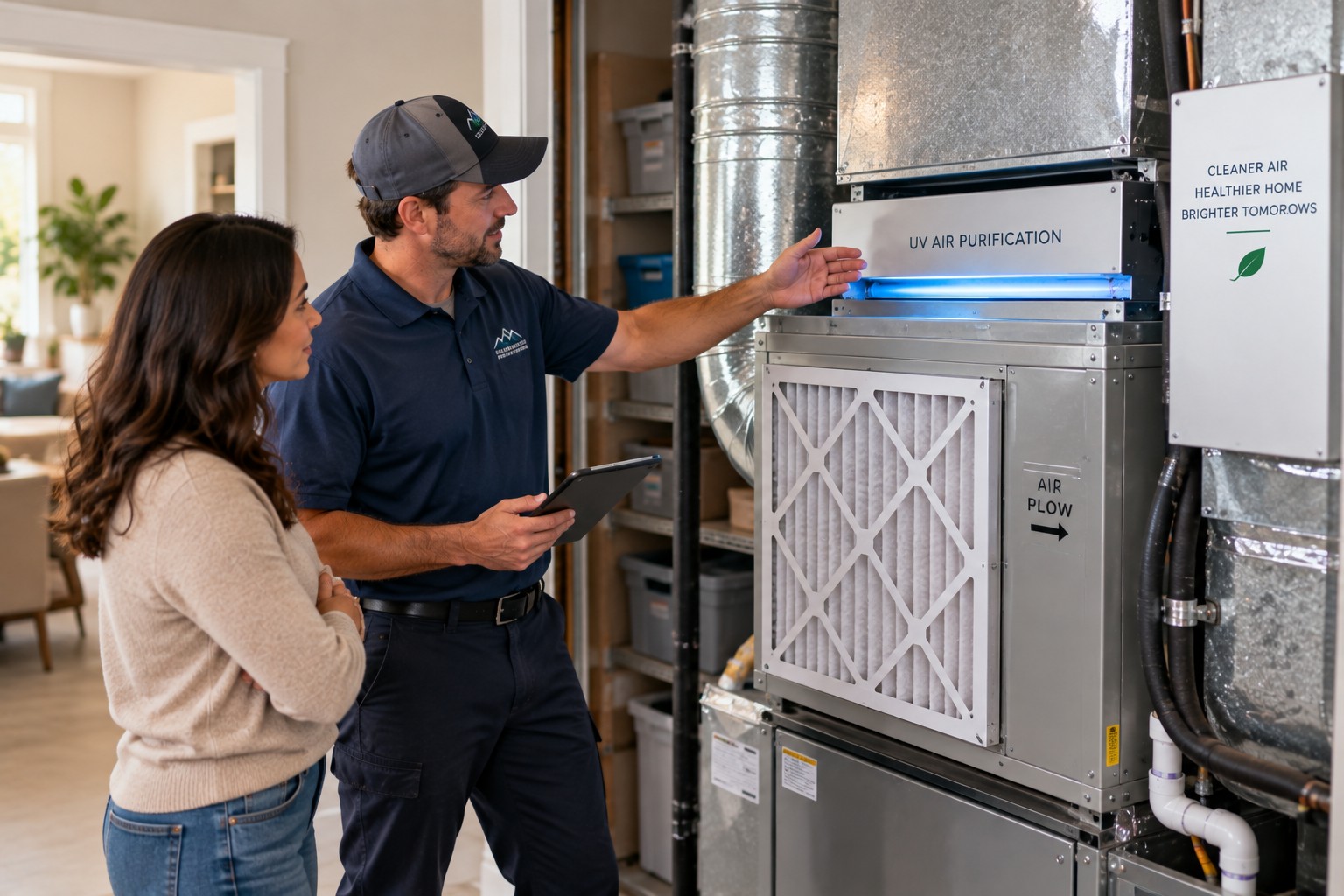
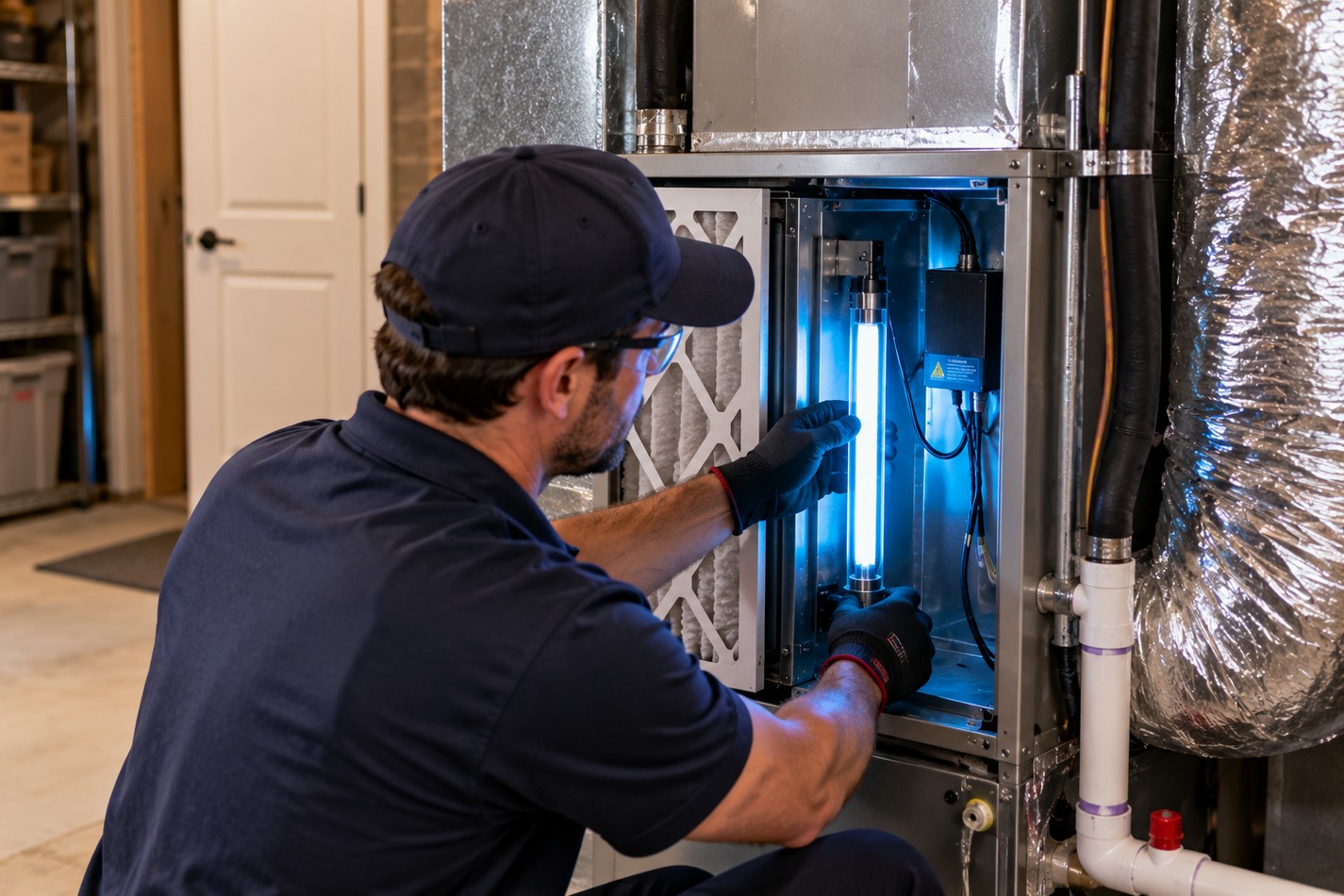
A UV air purification system in Central Valley typically uses UV-C lamps installed inside or near an HVAC air-handling unit. When air passes through the treated area, microorganisms are exposed to ultraviolet energy.
The effectiveness of a UV installation depends on several factors:
- UV intensity: The lamp must provide sufficient UV output.
- Exposure time: Air needs adequate exposure within the treatment zone.
- Lamp placement: Positioning affects how consistently microorganisms receive UV exposure.
- Maintenance: UV lamps require inspection and eventual replacement.
- Airflow design: The system must move air through the intended treatment area.
This is why professional air purifier installation in Central Valley should consider the existing HVAC equipment rather than treating every installation as identical.
UV Purification vs. Air Filtration: A Practical Comparison
| Feature | Traditional Air Filter | UV Air Purification |
|---|---|---|
| Primary function | Captures airborne particles | Inactivates certain microorganisms |
| Dust and pollen | Captures particles | Does not physically capture them |
| Certain bacteria and viruses | May capture some particles | Designed to inactivate certain microorganisms |
| Mold spores | Can physically capture particles | Effectiveness depends on UV exposure and organism |
| Removes particles from airflow | Yes | No |
| Maintenance | Requires filter replacement | Requires lamp inspection/replacement |
| Main role | Particle control | Biological air treatment |
The comparison shows why the technologies should not necessarily be treated as competing products. They address different aspects of indoor air quality.
Should You Choose UV or a Filter?
Rather than asking whether UV is better than filtration, consider which indoor air concerns you need to address. Filters are suited to particles such as dust and pollen, while UV treatment can provide an additional approach to certain biological contaminants.
In some HVAC systems, using both technologies can provide complementary benefits. However, air-cleaning equipment cannot replace addressing underlying issues such as moisture, poor ventilation, combustion pollutants, or contamination sources.
When Should You Consider Professional Air Quality Services in Central Valley?
Recurring dust, musty odors, visible moisture, or persistent indoor-air concerns may indicate an underlying issue that needs attention.
Professional indoor air quality services in Central Valley can identify whether filtration, UV treatment, ventilation, humidity control, or another solution is appropriate. Homeowners can also learn about common warning signs in our guide 10 Signs Your Home Has Poor Indoor Air Quality.
An evaluation can also help determine whether the issue stems from the HVAC system, the building, or an indoor pollutant source.
What Should You Consider Before Installation?
Before choosing an air-cleaning upgrade, consider:
- Primary concern: Dust, pollen, odors, biological contaminants, or multiple issues.
- HVAC compatibility: Ensure the system supports the selected technology.
- Airflow: Check that filtration will not create excessive resistance.
- Maintenance: Review replacement and inspection requirements.
- Coverage: Decide between whole-home and room-specific treatment.
- Source control: Address moisture, ventilation, or contamination at the source.
A professional assessment can help ensure the solution suits your HVAC system and addresses your specific indoor-air concerns rather than relying solely on advertised technology.
Conclusion
Traditional filters and UV purification serve different purposes: filters capture airborne particles, while UV systems inactivate certain microorganisms. If you're considering air quality services in Central Valley, have your HVAC system assessed to determine whether filtration, UV treatment, or a combination of both best addresses your indoor-air concerns.
For professional guidance and indoor air-quality solutions, contact A&G Heating and Air to explore options suited to your home's HVAC system.
Improve Your Home's Indoor Air Quality
Talk with A&G Heating and Air about filtration, UV air purification, and the right solution for your HVAC system.
Contact Us