
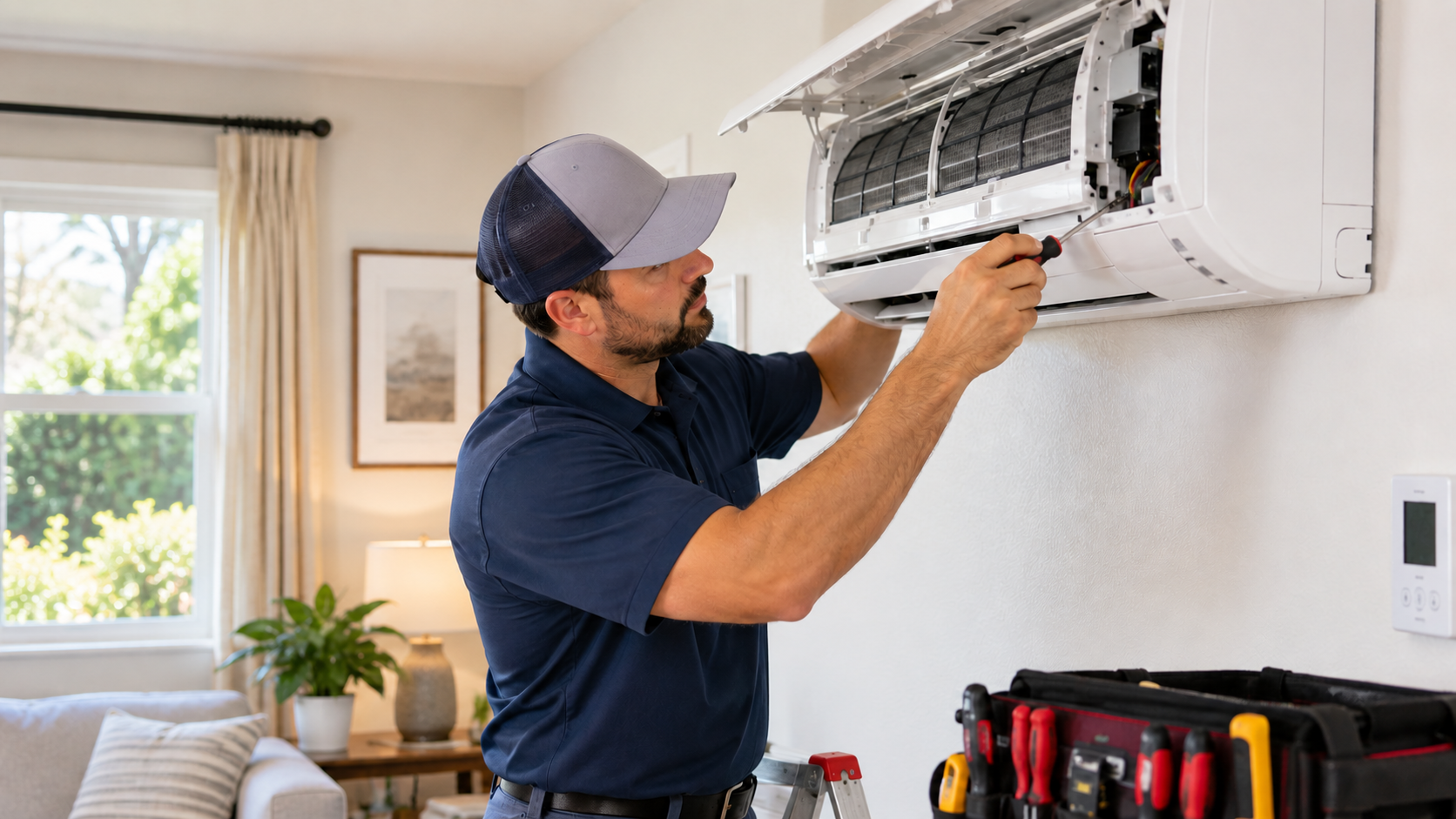
Key Takeaways
- AC failures can result from clogged filters, electrical issues, refrigerant problems, blocked drains, dirty condensers, worn components, or restricted airflow.
- Homeowners can safely check the thermostat, filter, power supply, and visible debris around the outdoor unit.
- Electrical, refrigerant, compressor, and complex mechanical repairs should be handled by qualified HVAC professionals.
- Prompt emergency ac repair in Central Valley can help resolve serious cooling issues before they worsen.
A sudden AC failure can quickly become a serious issue during a hot Central Valley afternoon. Common causes include clogged filters, electrical failures, refrigerant problems, and blocked condensate drains.
Recognizing the warning signs helps homeowners identify what they can safely check and when to call for professional emergency ac repair in Central Valley. This guide covers common AC breakdown causes and practical steps to take when your system stops working.
What Are the Common Reasons an Air Conditioner Stops Working?
An air conditioner can stop cooling because of restricted airflow, electrical problems, refrigerant issues, drainage problems, dirty outdoor components, worn mechanical parts, or ductwork issues. Similar symptoms can come from very different causes, which is why proper diagnosis matters.
1. A Dirty or Clogged Air Filter
A clogged filter restricts airflow, causing weak air circulation, longer cooling cycles, or uneven temperatures. Check the filter regularly and replace it according to the manufacturer's recommendations to prevent unnecessary system strain.
2. Electrical Component Failure
Faulty capacitors, contactors, motors, wiring, or controls can prevent the AC from starting or cause unexpected shutdowns. Repeated breaker trips, clicking, humming, or burning odors require professional attention. Avoid attempting electrical repairs without proper training.
3. Refrigerant Problems
Low refrigerant often indicates a leak or another system issue rather than normal usage. Warm air, long cooling cycles, ice on refrigerant lines, or reduced cooling can be warning signs. A technician should identify and address the underlying cause instead of simply adding refrigerant.
4. A Clogged Condensate Drain
AC systems remove moisture from indoor air through a condensate drain. If the drain becomes clogged, water can back up and trigger a safety switch that shuts the system down. Water around the indoor unit should be addressed promptly, especially near ceilings or finished areas.
5. A Dirty Outdoor Condenser
Leaves, dirt, grass clippings, and other debris can restrict airflow around the outdoor condenser and reduce cooling performance. Keep the area around the unit clear, while leaving internal cleaning and electrical access to a qualified professional.
6. Worn Motors, Fans, or Other Components
Motors, fans, capacitors, and other components can wear over time, particularly with heavy summer use. Unusual noises, frequent cycling, inconsistent cooling, or recurring repairs may indicate component problems. A professional diagnosis can determine whether repair or replacement is appropriate.
7. Airflow or Ductwork Problems
The AC may run normally while poor ductwork or restricted airflow causes uneven cooling. If some rooms remain warm while others cool properly, the issue may involve leaking, obstructed, or poorly balanced ducts rather than the AC unit itself.
AC Problems at a Glance
| AC Problem | Common Warning Signs | Recommended Action |
|---|---|---|
| Clogged air filter | Weak airflow, longer cycles | Inspect and replace the filter |
| Electrical failure | Humming, clicking, shutdowns | Arrange professional diagnosis |
| Refrigerant problem | Warm air, ice, poor cooling | Professional leak and system inspection |
| Clogged condensate drain | Water near indoor unit, shutdown | Arrange drain inspection |
| Dirty condenser | Poor cooling, long cycles | Keep surrounding area clear |
| Worn components | Noise, cycling, inconsistent cooling | Professional component evaluation |
| Ductwork issue | Uneven room temperatures | Inspect airflow and ductwork |
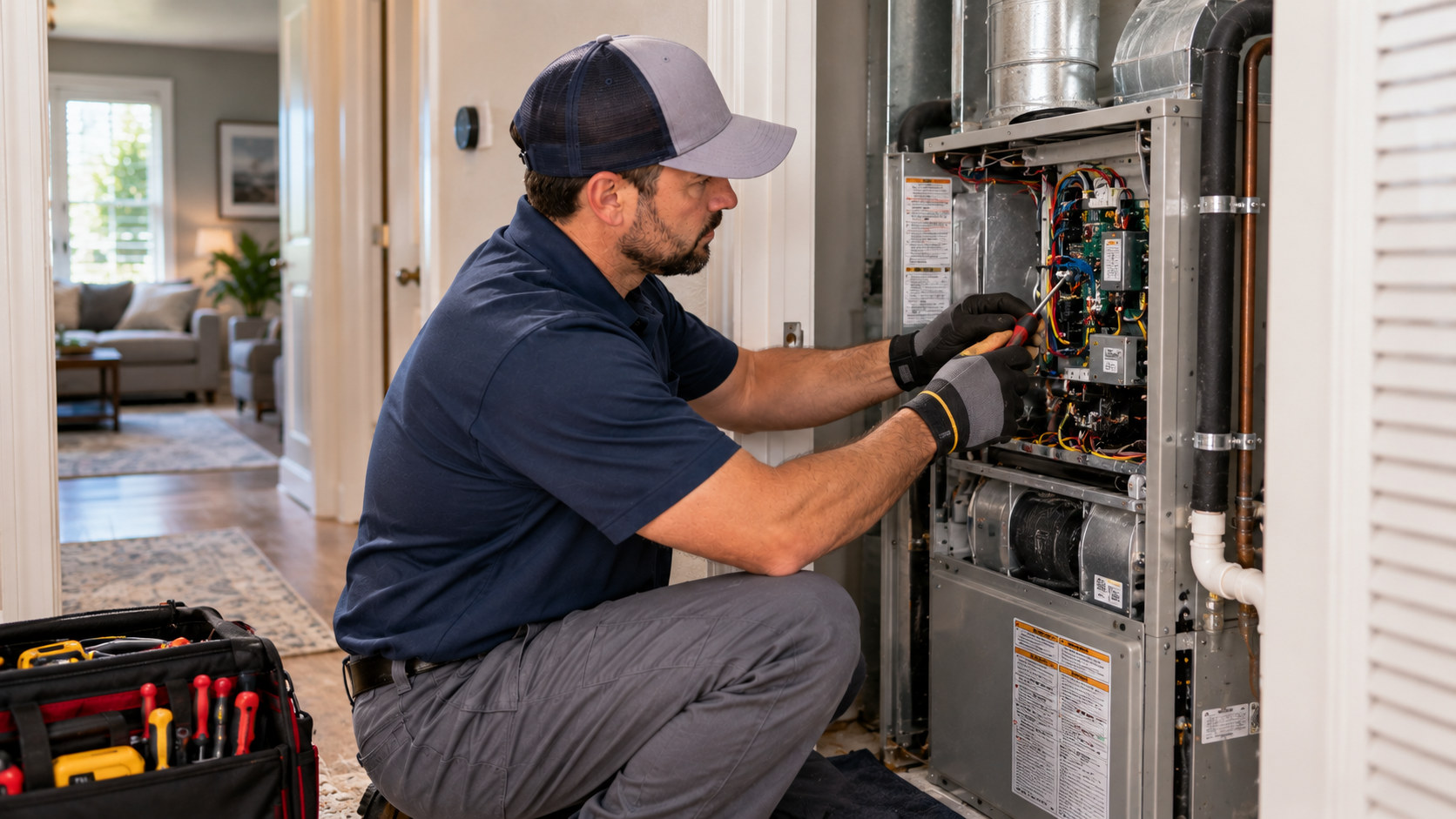
When Should You Call for Air Conditioning Repair Services in Central Valley?
Consider professional air conditioning repair services in Central Valley when basic checks do not restore cooling or the system shows signs of a serious issue.
Before scheduling service, safely:
- Confirm the thermostat is set to cooling.
- Check that the system has power.
- Inspect the air filter for dirt or blockage.
- Clear obvious debris around the outdoor unit.
- Note any unusual noises, odors, leaks, or when the issue started.
Avoid opening electrical panels or handling refrigerant, compressors, or motors, as these repairs require specialized equipment and training. For professional help, visit A&G Heating and Air's AC repair service.
How Can Homeowners Reduce the Risk of Emergency AC Failure?
Preventive maintenance cannot eliminate the risk of AC breakdowns, but it can help catch developing issues early. Regularly inspect the filter, keep the outdoor condenser clear, monitor cooling performance, and schedule professional maintenance.
Longer cooling times, unusual noises, or changes in cycling can signal an emerging problem. The U.S. Department of Energy also provides guidance on maintaining air-conditioning and HVAC systems for reliable operation.
For more information on common summer AC failures, read Top Reasons Air Conditioners Break Down During Central Valley Summers, which covers additional causes and warning signs homeowners should know.
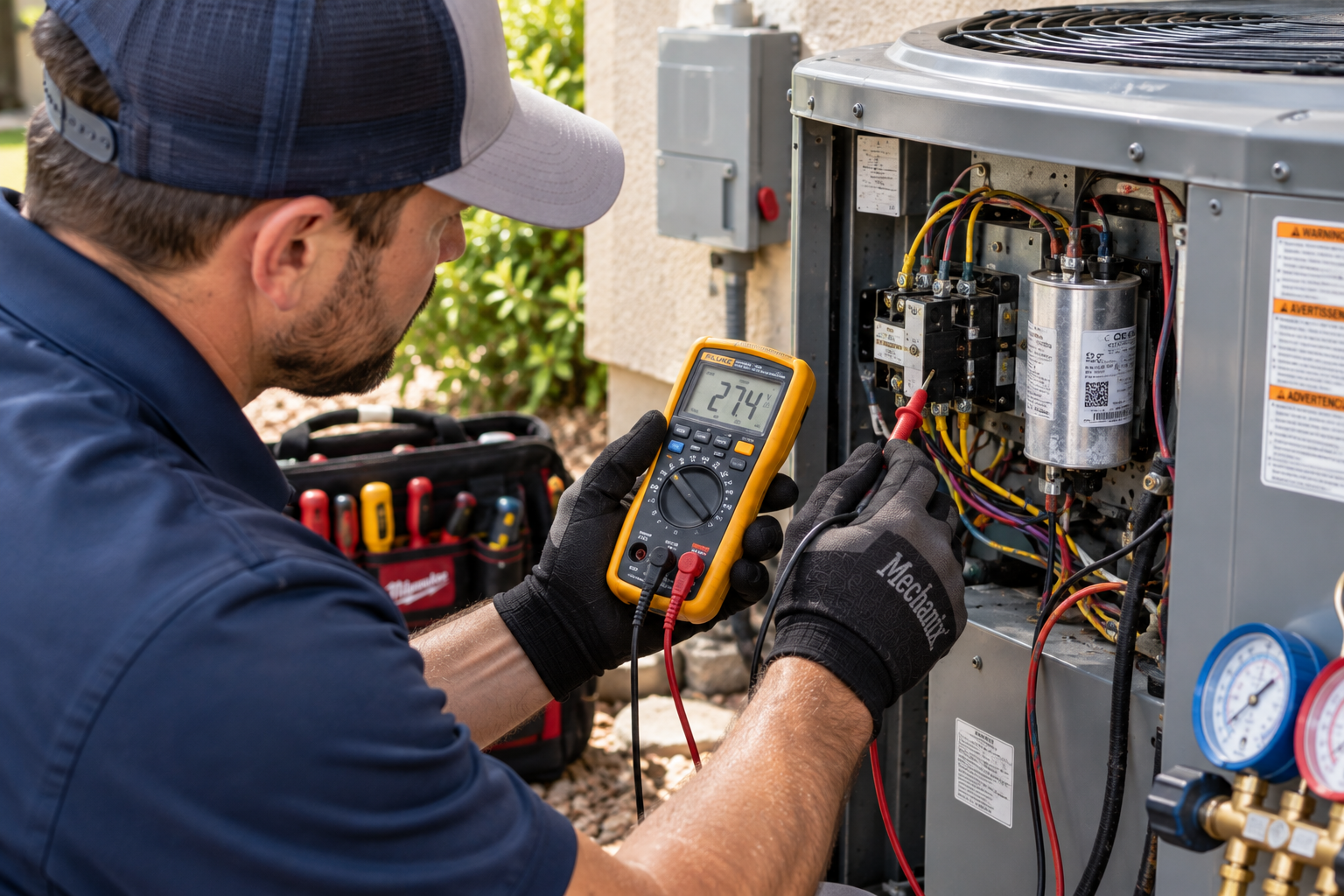
When Is Emergency AC Repair in Central Valley Necessary?
Professional emergency ac repair in Central Valley may be needed if the system stops cooling during extreme heat, repeatedly trips, develops a major leak, or poses potential safety or property risks.
For less urgent issues, timely air conditioning repair can help prevent complete failure. For same-day ac repair, describe symptoms such as no cooling, warm air, leaks, unusual noises, or repeated shutdowns and confirm availability.
Conclusion
An AC that stops working may be caused by a clogged filter, blocked drain, airflow restriction, electrical fault, refrigerant issue, or worn component rather than a major system failure. Start with basic checks, watch for warning signs, and avoid attempting electrical or refrigerant repairs without proper training. If the system still does not cool or shows signs of a serious issue, professional ac repair in Central Valley can help identify and resolve the underlying problem.
For professional AC service and repair support, contact A&G Heating and Air and learn more about available air conditioning services.
Need Emergency AC Repair?
Contact A&G Heating and Air for professional AC repair support in the Central Valley.
Contact Us